

Looking Beyond Head and Flow: Why the Curve Matters
A well-designed drainage system relies on many elements, but one component sits at the centre of its performance: the flow control.
Acting as the keystone of the design, the flow control determines how water is released from site, how storage fills and ultimately how the system behaves during rainfall events.
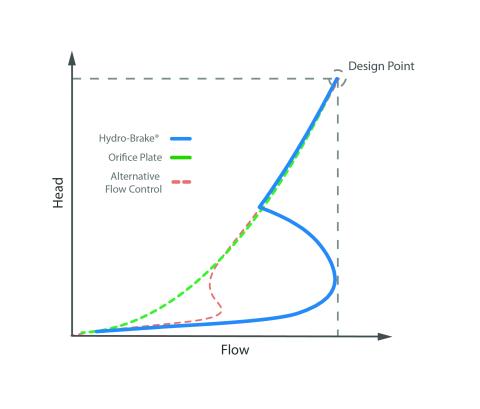
Traditionally, flow controls are specified using head and flow. While these values are essential, they only describe a single point on a much wider performance profile. In reality, what matters just as much, if not more, is how the flow control performs across the full discharge curve.
That is why, when it comes to controlling flows and reducing flood risk, it is important to look beyond the headline numbers.

Flow Control: It’s not just head and flow, it’s the curve that gets you there
Two flow controls may meet the same design point on paper, but behave very differently as flows increase during a storm. This behaviour directly affects how quickly storage fills, how effectively peak flows are controlled and how the system responds under real conditions.
Same numbers. Different curves. Different outcomes.
For contractors and groundworkers delivering drainage schemes on site, this distinction is critical. Installing the specified flow control ensures that the system performs as the designer intended. Changing that control, even to what appears to be a like-for-like alternative, can alter the curve and therefore the performance of the system as a whole.
This is particularly important when considering stormwater storage and flood risk. A high-performance control such as a Hydro-Brake® Optimum can deliver significant savings in storage volume and construction costs by managing flows more efficiently across the curve. However, swapping to a different vortex flow control can have unintended consequences. While the head and flow may match, the behaviour of the alternative unit may not, meaning the storage volume originally designed may no longer be sufficient and this can increase the risk of flooding.
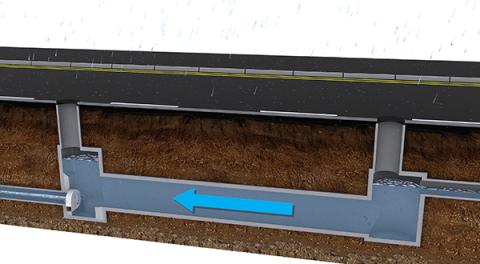
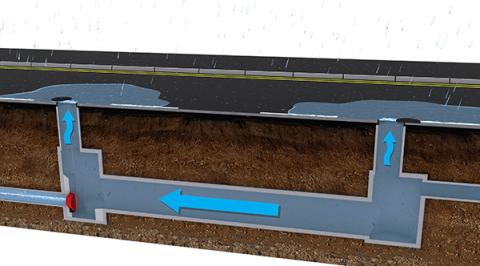
In practice, this means that small changes to the flow control can lead to much larger impacts elsewhere in the system, such as undersized storage which may increase flood risk and costly rework and damages.
Check your curve
Before supplying or installing a flow control, take a moment to understand how it performs across the full range of conditions, not just at the design point. If there is any doubt, seek advice before making a change.
Because when the curve changes, the system changes. Getting it right first time keeps projects on track, protects your work and ensures the drainage performs as intended.
Need help checking a spec?
Speak to your Regional Sales Manager or call our stormwater team on 01275 337937