
Every Site Is Different. Why Should Every Stormwater Solution Be the Same?
A conversation with Paul and Mathieu on runoff treatment, water quality and smarter design.
Why is runoff treatment becoming such an important topic in France today?
Paul: For many years, stormwater discussions focused primarily on managing flow rates and reducing flood risk.
Those objectives remain essential, but today there is increasing attention on water quality and the pollutants carried by runoff before discharge.
Project teams are being asked to think not only about how much water is being discharged, but also about what that water contains.
What are the main pollutants engineers should be thinking about?
Mathieu: The answer depends on the site, which is exactly why runoff treatment isn't a one-size-fits-all exercise.
On many projects, we're looking at:
• Suspended solids (MES)
• Fine particles
• Hydrocarbons
• Floatable debris
• Pollutants associated with sediments
The key question is always: what are we trying to remove before discharge?
Why is understanding the site so important when selecting a treatment solution?
Paul: Because different sites create very different treatment challenges.
A retail development doesn't generate the same runoff characteristics as a motorway or an industrial facility.
Every project has its own constraints, pollutants and water-quality objectives. Understanding those factors is often the first step towards selecting the most appropriate level of treatment.
How was DDSelect® developed to address those challenges?
Mathieu: DDSelect® was designed around flexibility.
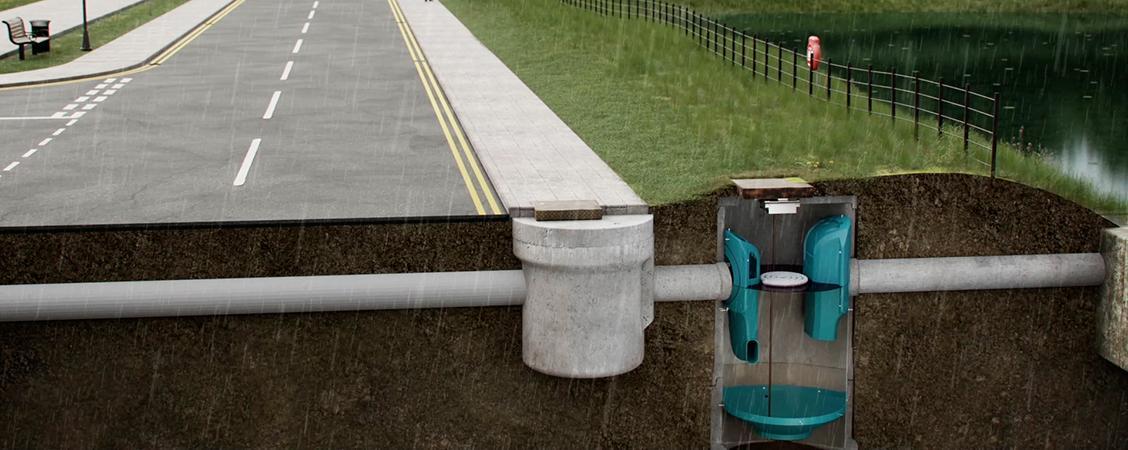
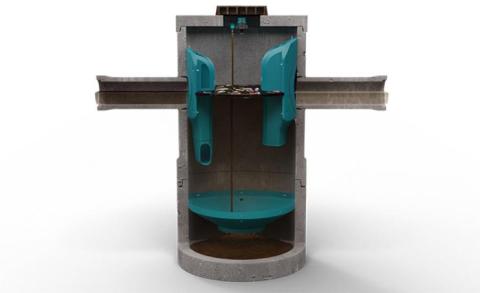
Using hydrodynamic vortex separation, it treats runoff before discharge while allowing designers to select different treatment configurations depending on project requirements.
Rather than applying the same treatment approach everywhere, designers can select a solution that aligns with the objectives of the project.
What proven treatment performance does DDSelect® offer?
Paul: Performance is naturally one of the first things project teams ask about.
DDSelect® delivers:
✅ 80-99% removal of suspended solids (MES)
✅ Up to 98% hydrocarbon retention
✅ Effective capture of floatables and associated pollutants
These proven performance levels help designers address specific water-quality objectives with confidence.
Does every project require the same level of runoff treatment?
Mathieu: Not necessarily.
Every site has different runoff characteristics, different pollutants and different water-quality objectives.
That's why I don't believe in a one-size-fits-all approach to treatment.
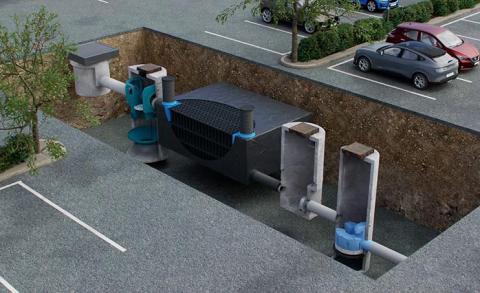
DDSelect® is available with multiple treatment configurations, allowing designers to select a solution that aligns with the specific requirements of the project.
For me, that's one of the key strengths of the system. Treatment performance can be matched to project objectives rather than forcing every project into the same solution.
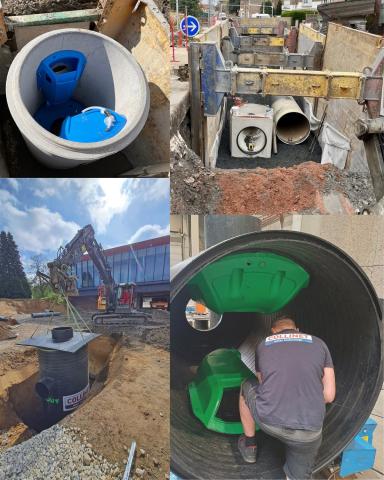
Images source of our global partners: Deschacht, Collinet, Roadstone
Why has DDSelect® been so widely adopted in France?
Paul: I think it's a combination of proven performance, flexibility and experience.
France has a wide variety of projects, from commercial developments and industrial sites to transport infrastructure and public-sector schemes.
Designers need solutions that can adapt to different requirements, and DDSelect® was developed with that flexibility in mind.
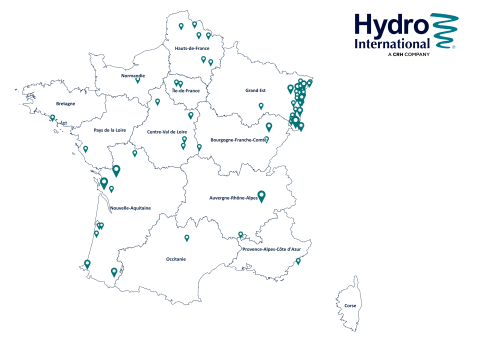
Today, there are more than 300 DDSelect® installations across France, giving project teams confidence that the technology performs in real-world conditions.
DDSelect® is available in both concrete and plastic. Why is that important?
Mathieu: Because every project presents different practical challenges.
Some developments may favour concrete solutions, while others may benefit from the flexibility and handling advantages of plastic chambers.
By offering both concrete and plastic options, DDSelect® provides greater design flexibility and allows engineers to select the most appropriate solution for their site constraints, construction programme and installation requirements.
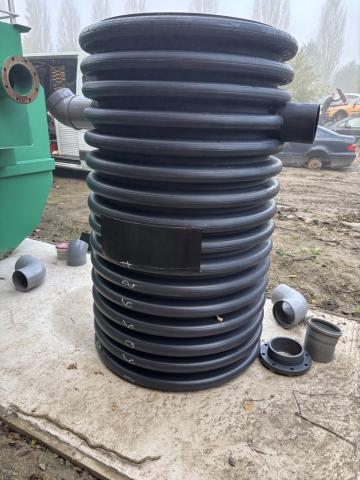
Image source of our partner Polieco
Hydro has recently updated its Online Design tool. Why is that important for designers?
Paul: Engineering teams are under increasing pressure to deliver projects quickly while maintaining design quality.
Our online design tools make it easier for engineers to evaluate solutions earlier in the design process, whether they're considering runoff treatment with DDSelect® or flow control with Hydro-Brake® Optimum.
The aim is simple: help designers access information, explore options and progress projects more efficiently.
How do digital tools support better stormwater design?
Mathieu: Good stormwater management is about more than selecting individual products.
Engineers need to understand how different elements work together as part of the wider drainage strategy.
Digital design tools help project teams evaluate options more quickly, compare different approaches and gain greater confidence in their decisions at an earlier stage of the project.
That means less time spent searching for information and more time focused on designing effective solutions.
Why is that particularly relevant in France?
Paul: Because stormwater strategies are becoming increasingly holistic.
It's no longer just about managing discharge rates or reducing flood risk. Water quality is becoming an increasingly important part of the discussion as well.
Designers are often looking at both runoff quantity and runoff quality simultaneously, so having access to tools that support those conversations helps teams make more informed decisions.
If there is one message you would like readers to take away, what would it be?
Mathieu: Every site is different.
The pollutants, constraints and treatment objectives can vary significantly from one project to the next.
That's why the conversation shouldn't simply be about selecting a treatment product.
It should start with understanding the site, identifying the pollutants of concern and defining the water-quality objectives the project is trying to achieve.
Once you understand those factors, you can select the treatment approach that best fits the project. That's exactly the philosophy behind DDSelect®.
Want to explore the right treatment approach for your project?
Try Hydro International's DDSelect® online design tool to assess project requirements, explore treatment options and identify the most appropriate configuration for your site.